
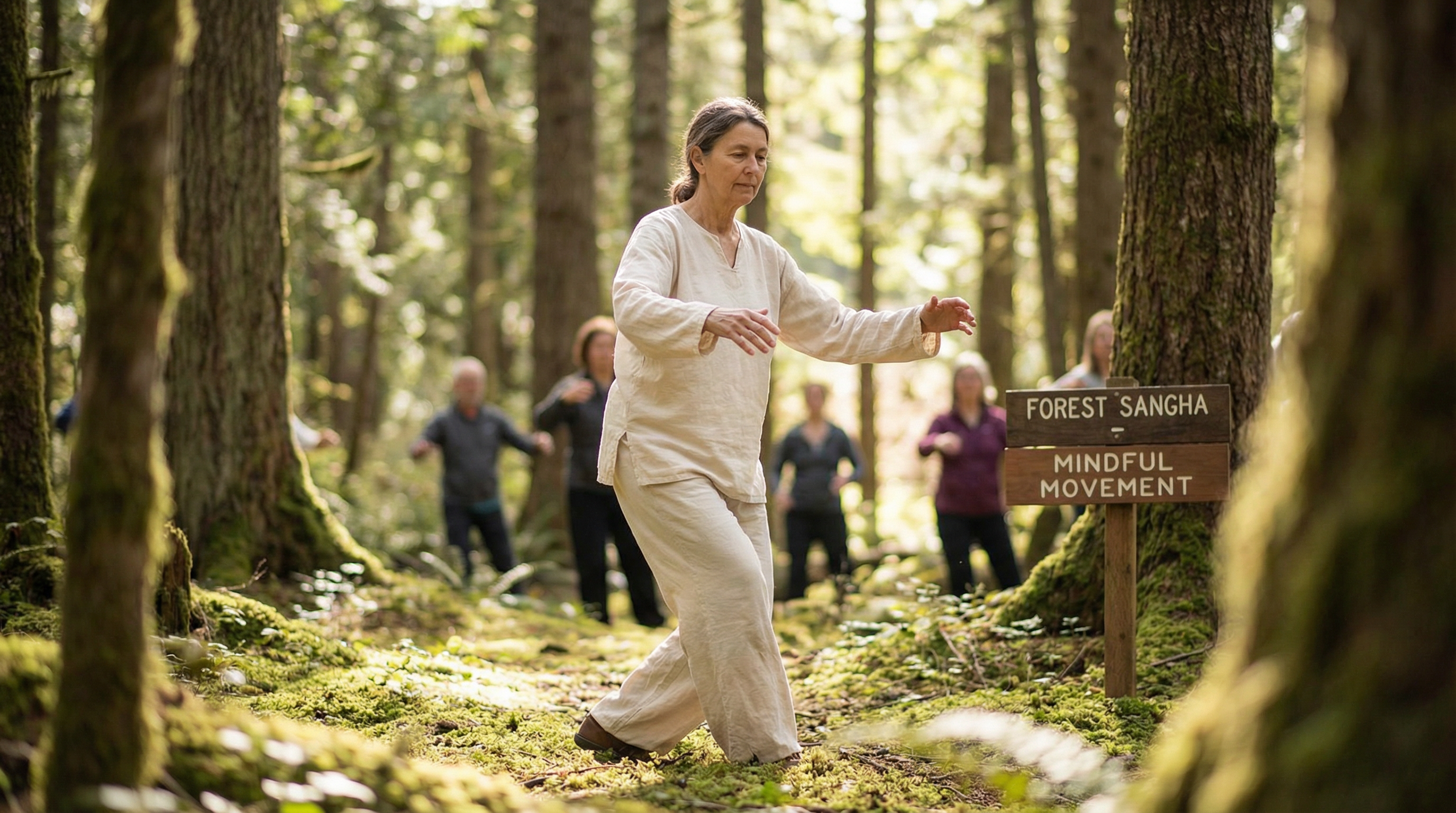
When Movement Meets Mindfulness
Physical activity and mindfulness are both powerful tools for mental health. But what happens when you combine them?
A comprehensive systematic review published in 2023 examined exactly this question. The researchers analyzed complex interventions that integrated physical activity with mindfulness practices to understand their combined effects on mental health and wellbeing.
The findings point to something important: combining these practices may create benefits that go beyond what either can achieve alone.
Link to the paper: https://www.sciencedirect.com/science/article/pii/S175529662300073X
What the Review Examined
The systematic review analyzed randomized controlled trials and other studies that combined physical activity with mindfulness-based interventions.
These "complex interventions" included:
- Yoga-based programs
- Mindful walking and running
- Tai chi and qigong
- Movement-based mindfulness training
- Exercise programs with mindfulness components
The review looked at outcomes including depression, anxiety, stress, wellbeing, and quality of life.
Key Findings: The Synergistic Effect
The review found evidence that combining physical activity with mindfulness produces meaningful improvements in:
- Mental health symptoms (depression, anxiety, stress)
- Overall wellbeing
- Quality of life measures
- Emotional regulation
Importantly, many studies suggested that the combination may be more effective than either practice alone.
Why the Combination Works
Several mechanisms likely explain why combining movement with mindfulness is so powerful:
- Embodied awareness: Movement provides a concrete anchor for attention, making mindfulness more accessible
- Dual activation: Physical activity and mindfulness engage complementary systems—the body and the mind
- Habit formation: Movement creates natural contexts for practice, increasing consistency
- Transfer effects: Training mindfulness during activity helps it generalize to daily life
The Challenge of Complex Interventions
The review also highlighted an important limitation: many studies combined multiple components, making it difficult to isolate which specific elements drive the benefits.
This complexity is both a challenge and a reality. Real-world wellbeing practices often involve multiple components working together.
How intuno Applies This Research
intuno is built on the principle that mindfulness works best when integrated with movement.
- Meditations are designed for activities like walking, running, and daily movement
- Guidance adapts to the rhythm of physical activity
- Practices fit into activities people already do
This approach aligns with the research showing that combining physical activity with mindfulness creates stronger, more sustainable benefits.
Practical Takeaway
You do not need to choose between movement and mindfulness. The research suggests they work best together.
Whether it is mindful walking, yoga, or bringing awareness to any physical activity, combining movement with mindfulness may amplify the benefits for mental health and wellbeing.
The evidence points to a simple truth: the body and mind are not separate. Training them together creates change that neither can achieve alone.