
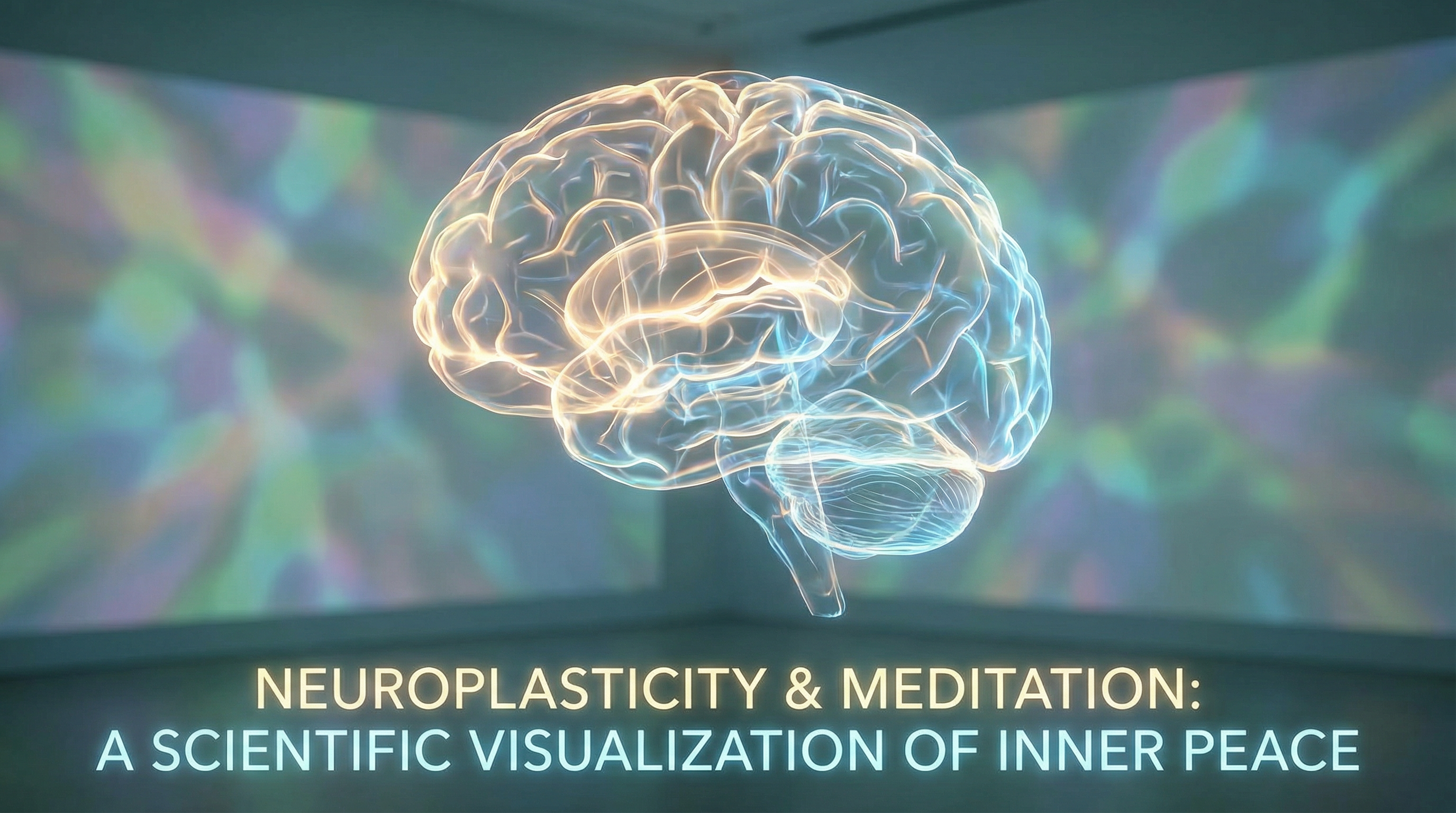
Can Meditation Really Change the Brain?
Meditation is often described as calming or grounding. But for many years, scientists asked a deeper question:
Does meditation create real, physical changes in the brain?
A landmark neuroscience study published in 2011 provided one of the first strong answers. It showed that meditation is not just a mental state. It can shape the brain itself.
The Study That Changed Meditation Research
The study was conducted by neuroscientist Britta Hölzel and colleagues and published in Psychiatry Research: Neuroimaging.
Unlike earlier research, this study followed participants over time instead of comparing long-term meditators to non-meditators.
- Participants completed an 8-week Mindfulness-Based Stress Reduction program
- Brain scans were taken before and after the program
- Participants had little or no prior meditation experience
This design allowed researchers to observe change directly.
Link to the paper: https://pubmed.ncbi.nlm.nih.gov/21071182/
What Changed in the Brain?
After eight weeks, participants showed increases in gray matter density in several brain regions, including:
- The hippocampus, involved in learning, memory, and emotional regulation
- Areas linked to attention and awareness
- Regions associated with perspective-taking and compassion
At the same time, the amygdala, a region strongly linked to stress reactivity, showed reductions that correlated with lower perceived stress.
These changes were modest but meaningful. They showed that the adult brain remains plastic and responsive to mental training.
State Effects vs Lasting Trait Change
One of the most important implications of this study is the distinction between:
- State changes, such as feeling calm during meditation
- Trait changes, such as becoming more resilient in daily life
Structural brain changes suggest that meditation can support trait-level adaptation when practiced consistently.
What This Study Does Not Claim
This research does not mean that:
- Meditation instantly rewires the brain
- Bigger brain regions automatically equal better functioning
- All meditation techniques produce the same effects
What it does show is far more realistic and powerful.
Mental training, when practiced repeatedly, can influence the brain systems that shape how we experience stress, focus, and emotion.
How intuno Applies This Insight
At intuno, this research strongly informs how meditations are designed.
Brain change depends on frequency and relevance, not on isolated long sessions. That is why intuno:
- Integrates meditation into everyday activities like walking, tidying, or commuting
- Encourages short, repeatable practices that fit naturally into life
- Focuses on habit formation instead of perfection
By embedding meditation into daily behavior, intuno supports the kind of repetition that brain plasticity requires.
Practical Takeaway
You do not need to step away from life to change your brain. You need consistent, meaningful practice that fits into how you already live.
That is exactly where meditation works best.